Pudu T300

Industrial delivery robot for material transport

Heavy-duty robot moving 300 kg loads – navigates precisely, adapts to changes, operates 24/7

Autonomous mobile robot for factories, warehouses, and industrial facilities

Autonomous mobile robot for factories, warehouses, and industrial facilities

Automate material transport with 300 kg capacity – eliminate manual cart pushing across your facility

Free your team from manual transport work and redeploy them to higher-value production tasks

Enable safer, consistent logistics with automated delivery and ISO 3691-4 compliant safety systems

Key Capabilities

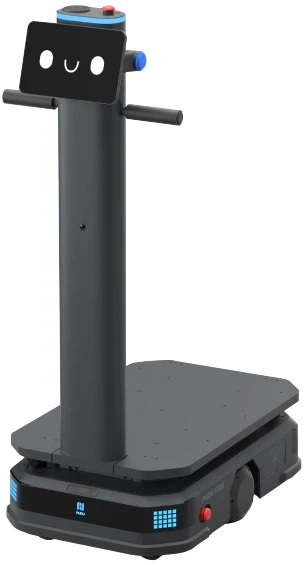
Pudu T300 robot features

Industrial material automation for factories, warehouses, and logistics facilities – combining autonomous heavy-load transport, adaptive navigation, and 24/7 operation in a single robot that keeps material flow consistent through peak production periods

Intuitive operator control and interface

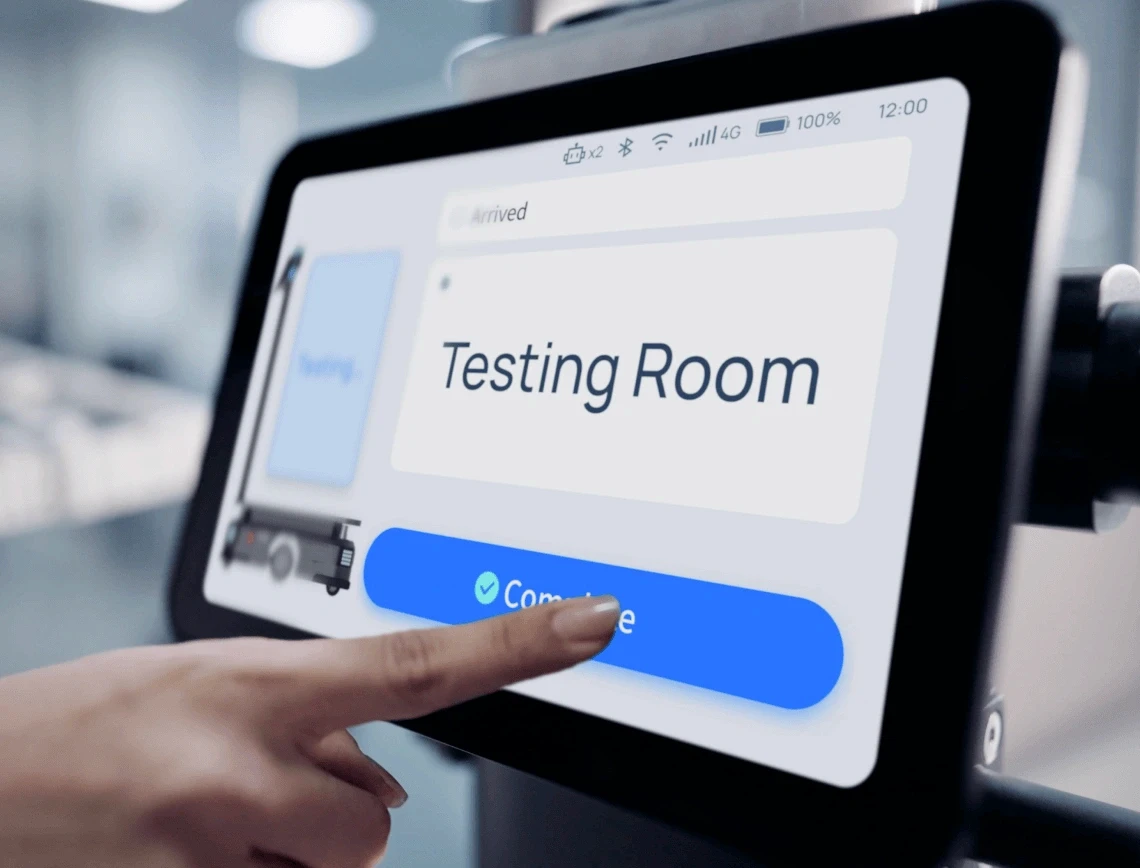
Easy-to-use touchscreen and voice commands enable staff to dispatch the robot without complex programming. Customizable buttons and audible alerts support seamless coordination between workers and machine.
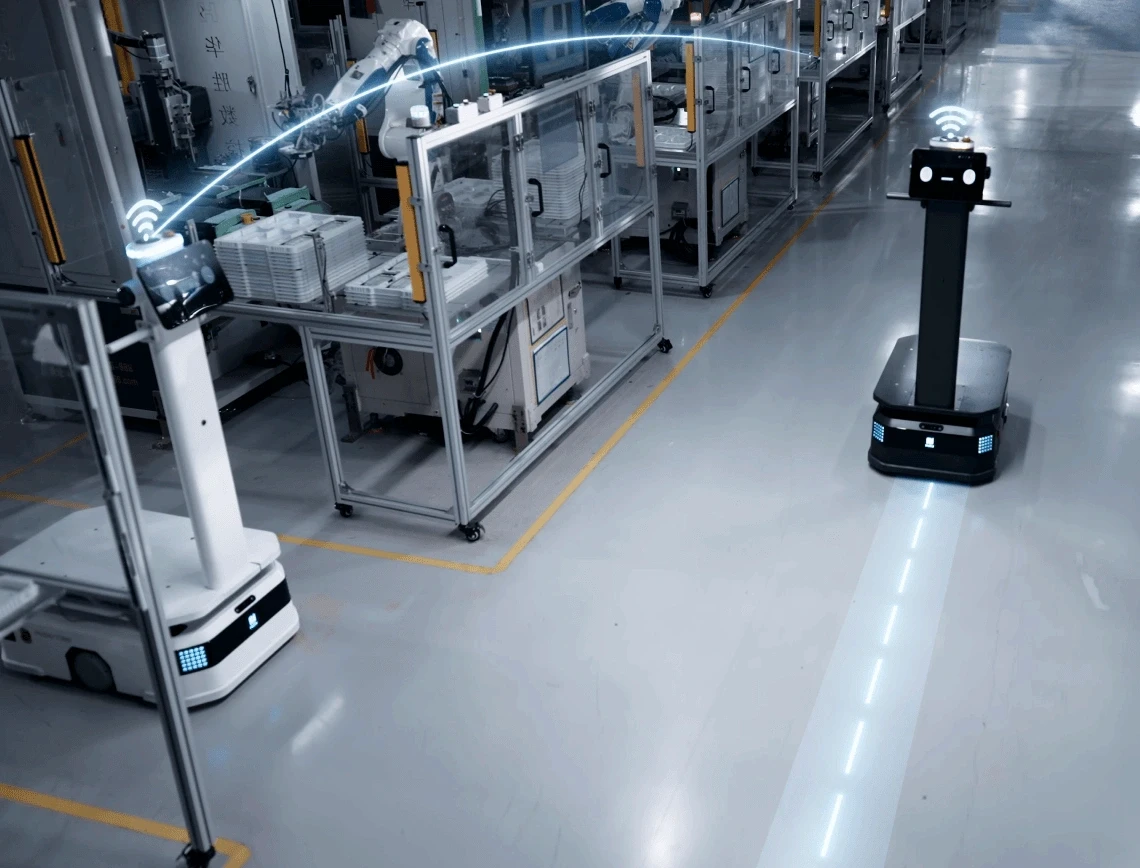
A room with a lot of tables and a lot of lights
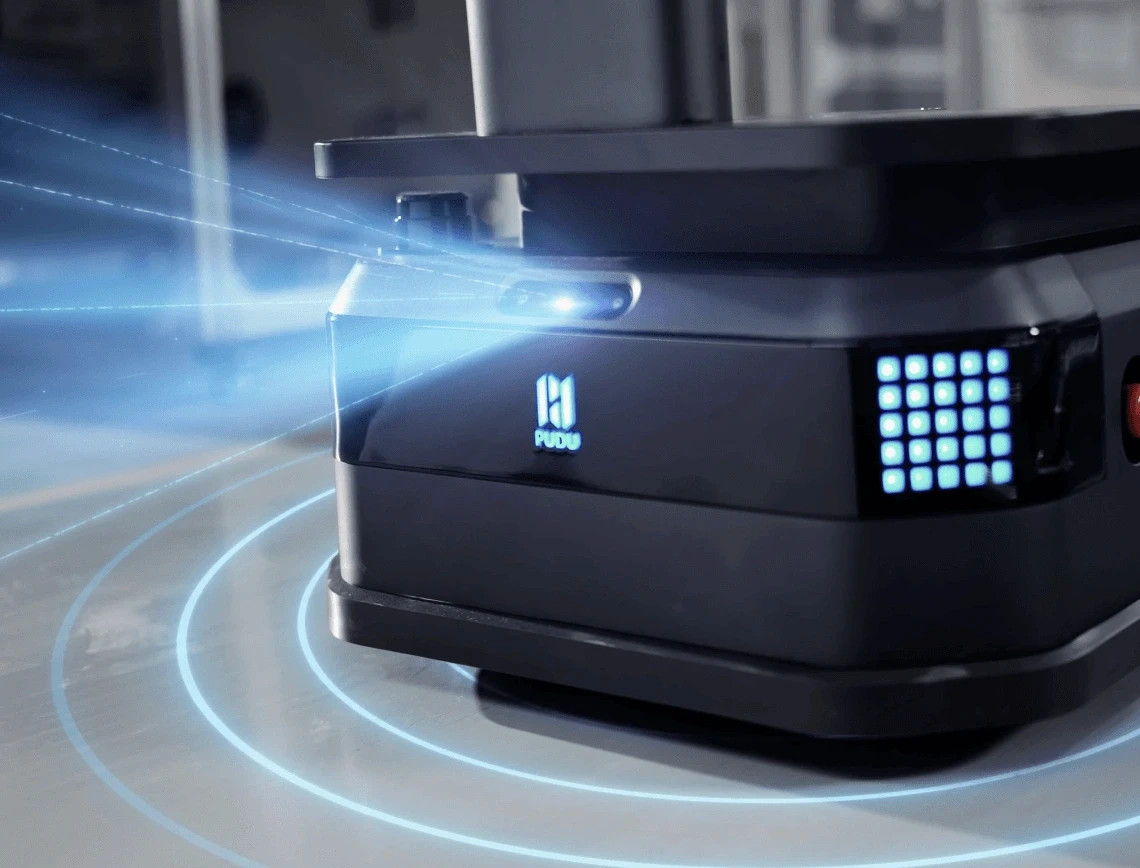
Pudu T300 front sensors detecting payload status

Intelligent payload detection

Automatic load status recognition confirms material placement and pickup – no manual handoff confirmation needed. The system streamlines material transfer and keeps transport cycles moving without interruption.

Adaptive navigation and route planning

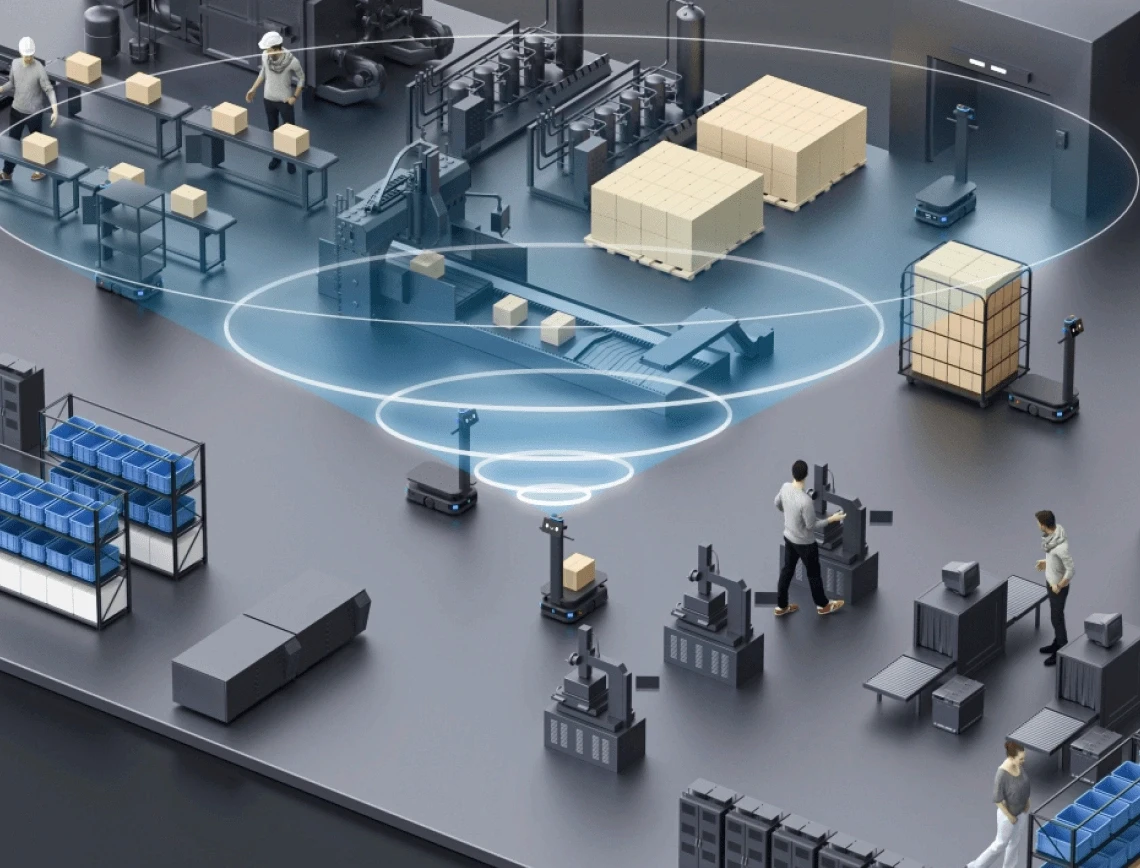
VSLAM+ and LiDAR SLAM enable autonomous routing that adapts instantly to layout changes. The robot navigates factories and warehouses without fixed floor markers or infrastructure modification.
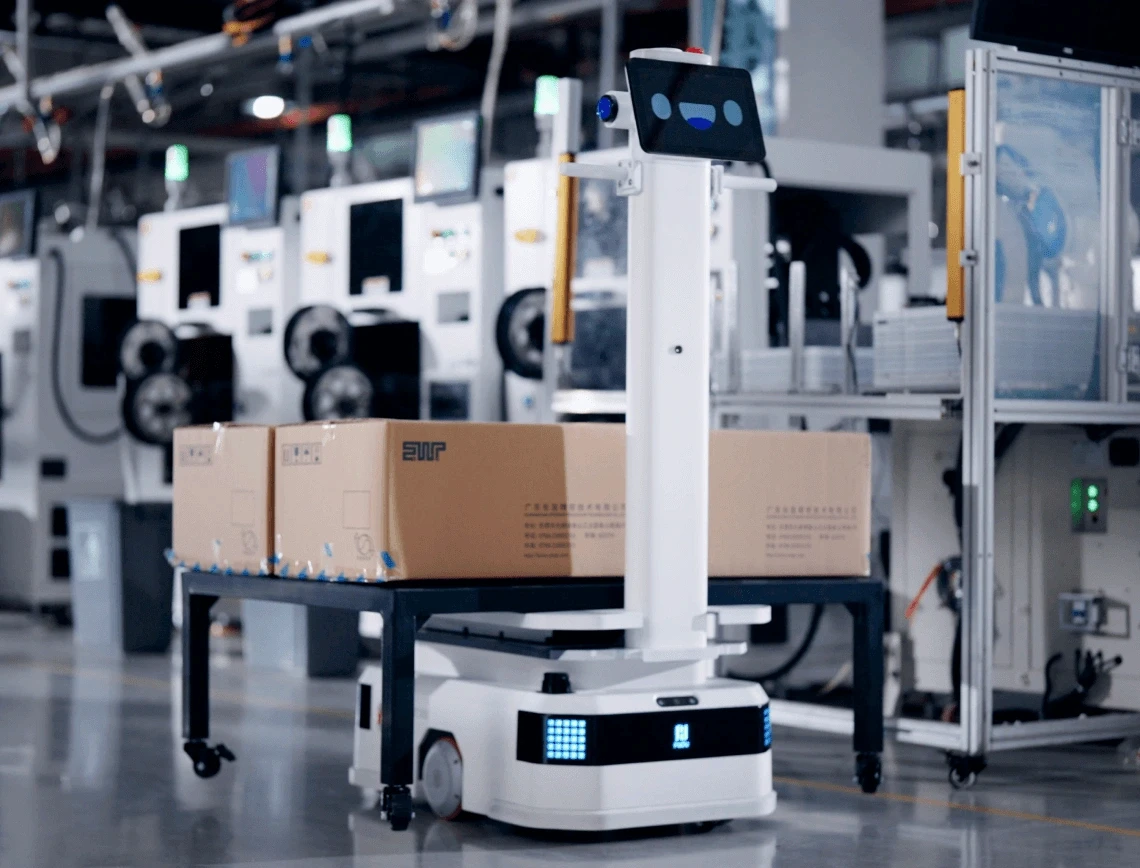
A large box of boxes on display in a room
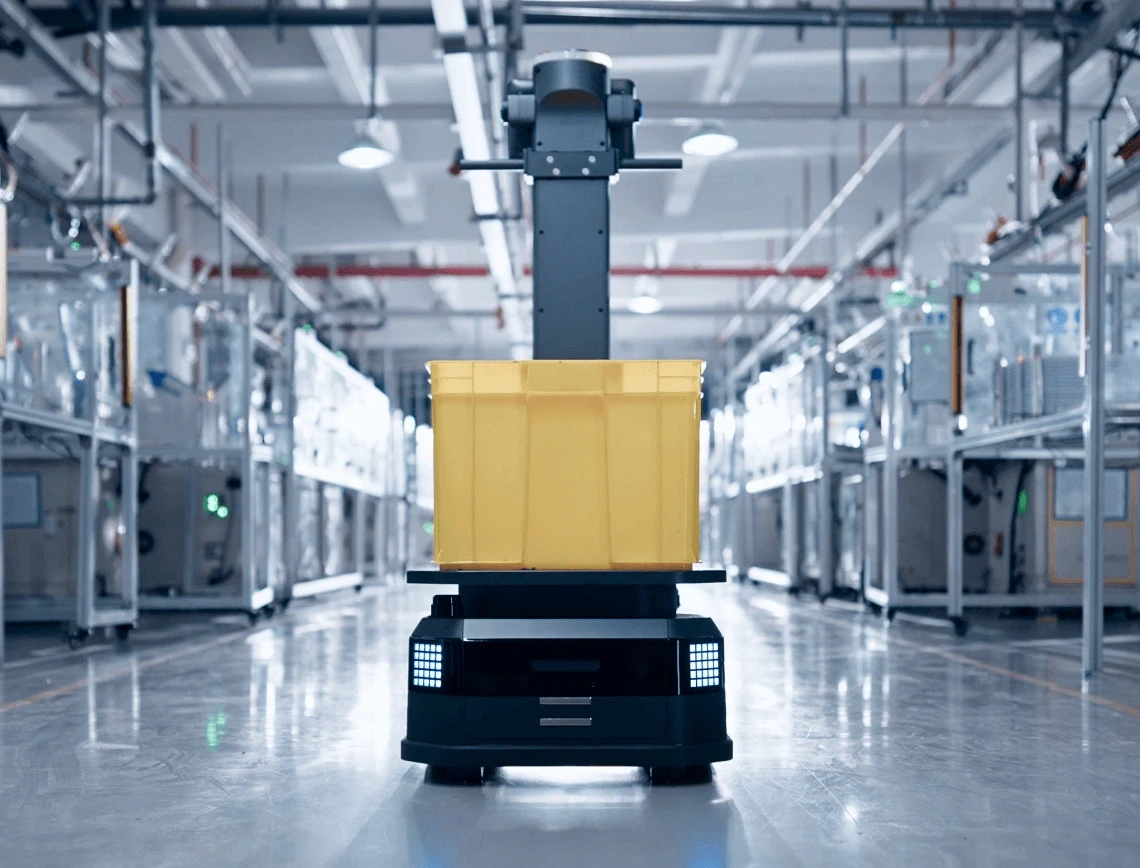
A large metal train car sitting in a warehouse

Multi-stop material delivery routes

Optimize transport paths and reduce manual material movement. T300 efficiently delivers loads up to 300 kg across multiple production zones in a single run, using autonomous planning to minimize walking distance and operational burden during peak hours.

Agile maneuverability in industrial spaces

Navigate factories where larger AGVs cannot operate. A 60 cm minimum clearance lets you deploy through narrow aisles, tight warehouse corridors, and complex production layouts.
A person holding a cell phone in front of a screen
A large room with a lot of tables and chairs

Automatic recharging and 24/7 operation

P: T300 autonomously returns to its charging dock when battery runs low, supporting up to 12 hours of continuous operation with fast 2-hour charging. This enables round-the-clock material transport without manual intervention.
Business value

Business value

Key benefits of Pudu T300

Key benefits of Pudu T300

Key benefits of Pudu T300

Reduce manual material handling work

Constant manual cart pushing exhausts your team during high-volume production. T300 handles transportation autonomously, reducing physical strain and allowing staff to focus on assembly, quality control, and higher-value production tasks.

Reduce manual material handling work

Constant manual cart pushing exhausts your team during high-volume production. T300 handles transportation autonomously, reducing physical strain and allowing staff to focus on assembly, quality control, and higher-value production tasks.

Keep staff focused on production instead of material transport

Manual material movement pulls workers away from productive tasks. When T300 manages heavy-load transport, your team can concentrate on what matters—production output, quality assurance, and problem-solving that requires human expertise.

Improve material transport efficiency and cycle time

Traditional manual cart pushing requires multiple journeys. T300 combines loads into optimized routes, cutting transport cycles and accelerating material flow between production zones, storage, and packing areas during peak operations.

Improve material transport efficiency and cycle time

Traditional manual cart pushing requires multiple journeys. T300 combines loads into optimized routes, cutting transport cycles and accelerating material flow between production zones, storage, and packing areas during peak operations.

Adapt instantly to production layout changes

Facility reorganization is costly and time-consuming with fixed AGV systems. T300's flexible VSLAM+ navigation adapts immediately to layout changes without infrastructure modification or reconfiguration – reducing downtime and redeployment costs.

Adapt instantly to production layout changes

Facility reorganization is costly and time-consuming with fixed AGV systems. T300's flexible VSLAM+ navigation adapts immediately to layout changes without infrastructure modification or reconfiguration – reducing downtime and redeployment costs.

Improve safety in human-robot shared spaces

Manual cart handling creates workplace hazards and injury risks. T300 is ISO 3691-4 compliant with built-in safety systems – reducing accidents, lowering workers' compensation costs, and creating safer collaboration between staff and automation.

Improve safety in human-robot shared spaces

Manual cart handling creates workplace hazards and injury risks. T300 is ISO 3691-4 compliant with built-in safety systems – reducing accidents, lowering workers' compensation costs, and creating safer collaboration between staff and automation.

Enable consistent logistics performance 24/7

Manual transport performance varies with fatigue and shift changes. Automated delivery ensures reliable, stable logistics regardless of time of day, workload intensity, or staffing levels – maintaining predictable material flow every operation cycle.

Enable consistent logistics performance 24/7

Manual transport performance varies with fatigue and shift changes. Automated delivery ensures reliable, stable logistics regardless of time of day, workload intensity, or staffing levels – maintaining predictable material flow every operation cycle.

Pudu T300 robot technical specifications

Pudu T300 robot technical specifications

Advanced autonomous navigation, exceptional agility, and intelligent digital management enable stable performance across demanding production environments.

Advanced autonomous navigation, exceptional agility, and intelligent digital management enable stable performance across demanding production environments.

A small radio is mounted on a metal pole

Standard material delivery

Tray and container handling

Lifting and transfer operations

Autonomous towing

Standard material delivery

Tray and container handling

Lifting and transfer operations

Autonomous towing

Standard material delivery

Lifting and transfer operations

Tray and container handling

Autonomous towing

Product type

Industrial AMR for material transport

Product type

Industrial AMR for material transport

Best environments

Factories, warehouses, logistics, manufacturing

Best environments

Factories, warehouses, logistics, manufacturing

Dimensions and machine weight

835 mm × 500 mm × 1350 mm 65 kg

Dimensions and machine weight

835 mm × 500 mm × 1350 mm 65 kg

Payload capacity

up to 300 kg

Payload capacity

up to 300 kg

Battery life and charging time Battery

12 hours (no load) 8 hours (full load) 2 hours charging

Battery life and charging time Battery

12 hours (no load) 8 hours (full load) 2 hours charging

Speed of movement

1.2 m/s

Speed of movement

1.2 m/s

Navigation and sensor system

VSLAM + Lidar SLAM

Navigation and sensor system

VSLAM + Lidar SLAM

Threshold overcoming height

20 mm

Threshold overcoming height

20 mm

Path clearance

60 cm

Path clearance

60 cm

Connectivity and management options

Pudu Link – monitoring and control; PUDU Scheduler – multi-robot coordination (up to 20); 4G Pudu Watch; elevator and e-gate integration; customizable control platform

Connectivity and management options

Pudu Link – monitoring and control; PUDU Scheduler – multi-robot coordination (up to 20); 4G Pudu Watch; elevator and e-gate integration; customizable control platform

Industries

Pudu T300 use cases

An interactive robot for delivery, guest greeting and engagement – through voice, light and adaptive behavior scenarios.

  • Factory material transport

  • Warehouse goods movement

  • Production line replenishment

  • Parts delivery between workstations

  • Logistics and distribution center transport

  • Heavy-load commercial delivery

  • Cross-floor delivery with elevator integration

  • Industrial cart and shelf transport

  • Factory material transport

  • Warehouse goods movement

CONTACT US

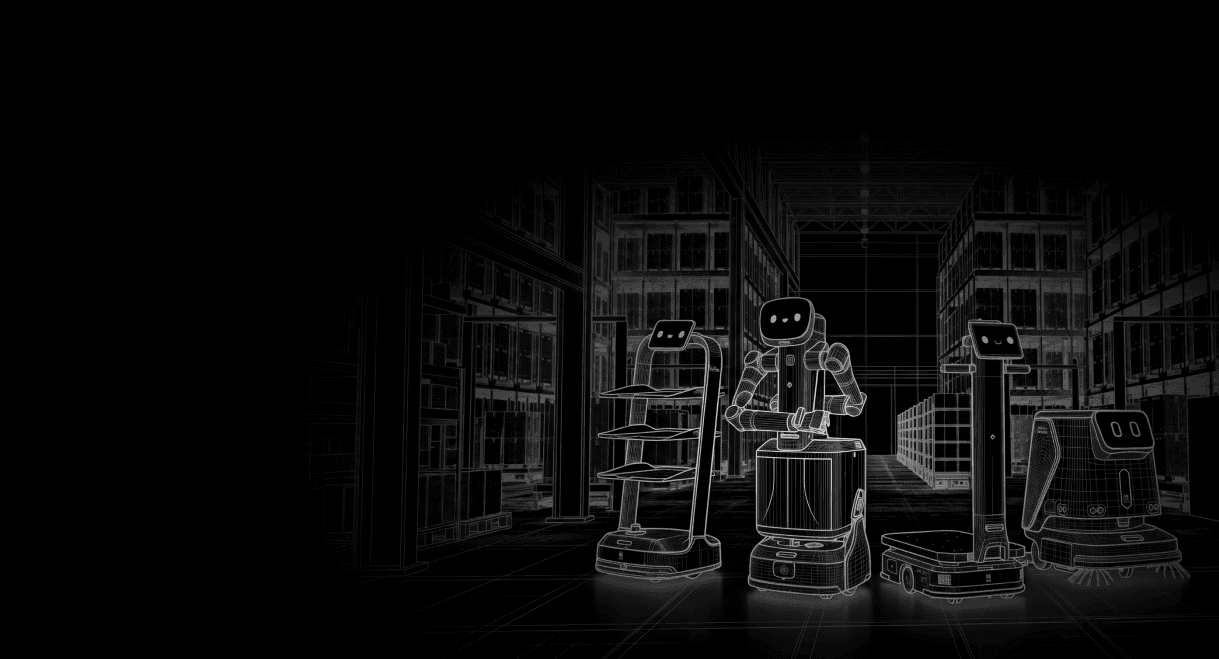
Every space needs its own approach

Deus Robotics select, combine and orchestrate robots from different models to help you achieve the results you're after.
Lineup of Pudu service robots on a dark background

The workflow

How Pudu T300 works

Map your facility with VSLAM+ and LiDAR navigation

On setup, T300 maps your factory or warehouse using integrated VSLAM+ and LiDAR SLAM navigation – no floor markers or infrastructure modifications required. The map is built once and reused continuously, allowing rapid deployment even in complex, high-ceiling industrial spaces. Efficient mapping means the robot is operational and transporting materials within hours of arrival.

Load materials, parts, or goods onto the robot

Staff place boxes, bins, pallets, or materials onto the robot's load platform, which safely carries up to 300 kg per trip. Multiple material types can be loaded simultaneously – one delivery route efficiently serves multiple production zones, storage areas, or packing stations at once.

Select destination and operating mode

Using the robot's touchscreen interface or remote app, operators specify the delivery destination and choose the appropriate mode – Auto-Delivery for autonomous transport, Follow Mode to assist workers during loading, or Power-Assist Mode for manual support. The robot automatically calculates its route and begins execution, adapting behavior to match the selected mode.

Navigate safely around workers, equipment, and obstacles

Advanced 360° LiDAR and depth cameras provide comprehensive environmental awareness. The robot detects obstacles, automatically slows or stops when needed, and smoothly navigates around workers, machinery, and equipment. Its 60 cm minimum clearance enables operation in tight factory aisles and warehouse corridors where larger AGVs cannot function effectively.

Confirm load delivery and continue the workflow

Advanced load status sensors automatically confirm when materials have been received or transferred. Once the handoff is complete, the robot understands the delivery is finished and autonomously transitions to its next task – moving to the next production zone, returning to the pickup point, or switching to a different operating mode.

Return to standby or accept the next assignment

T300 returns to standby or immediately accepts its next transport task. When battery runs low, it autonomously docks for recharging, supporting up to 12 hours of continuous operation with fast 2-hour charging (0-90%). Deus Robotics handles full deployment, facility integration, staff training, and ongoing operational support.

Deus RMS

Centralized Robot Management in a Single System

Deus RMS unifies robots from multiple vendors into a single system, enabling their orchestration and simplifying further scaling.

Real-Time Robot

Management

Unified Human-Robot Interaction System

Easy Integration into Existing IT Ecosystem

Deus RMS robot management dashboard

Deployment requirements

Deployment requirements

Is Pudu T300 right for your business?

Is Pudu T300 right for your business?

Is Pudu T300 right for your business?

Best-fit business types

T300 fits facilities with high-volume material transport and heavy-load handling – manufacturing plants, warehouses, logistics centers, distribution hubs, production facilities, and industrial commercial spaces. It's especially valuable where peak-hour material movement creates production bottlenecks, or where layout flexibility and rapid redeployment reduce downtime. For large multi-floor facilities, the robot combines autonomous delivery, elevator integration, and gate access into one solution. Deus Robotics can help confirm whether T300 matches your specific operational requirements.

Facility requirements before deployment

T300 operates indoors on stable, level flooring with transport paths at least 60 cm wide for safe navigation. The facility needs stable Wi-Fi connectivity, a designated charging area, and sufficient ceiling height (up to 30 meters supported). Before launch, Deus Robotics conducts facility mapping, establishes optimal transport routes, and trains your team to integrate the robot into existing workflows without production disruption.

Questions to ask before buying a delivery robot

How many material transport trips occur each shift, and how much involves repetitive manual cart pushing? Are production delays during peak hours caused by workers moving heavy loads between zones? Do you need autonomous delivery alone, or follow mode and power-assist capabilities? Can the robot navigate your factory aisles and corridors comfortably at their busiest times? What production layout changes are planned in the next 2-3 years? Most importantly – who will handle installation, staff training, and ongoing technical support after deployment?

A collage of photos of various appliances
A series of photographs showing a kitchen with a clock

FAQ

Pudu Robotics T300 robot FAQ

Pudu Robotics T300 robot FAQ

Pudu Robotics T300 robot FAQ

What is Pudu T300?

T300 is a heavy-duty autonomous mobile robot for factories, warehouses, and logistics facilities. It combines autonomous material transport up to 300 kg, adaptive VSLAM+ navigation, and 24/7 operational capability – all powered by integrated LiDAR and visual SLAM positioning without fixed floor markers or infrastructure modification.

Is Pudu T300 an AMR?

Yes. T300 is classified as an Autonomous Mobile Robot (AMR) that navigates independently using VSLAM+ and LiDAR SLAM technology. Unlike traditional AGVs requiring fixed tracks or floor markers, T300 adapts instantly to layout changes, making it flexible for dynamic production and warehouse environments.

What is the maximum payload of Pudu T300?

What is the maximum payload of Pudu T300?

What industries can use Pudu T300?

T300 is ideal for manufacturing plants, warehouses, logistics centers, distribution hubs, production facilities, and any industrial operation requiring heavy-load internal transport. It's especially valuable where production layout changes frequently or where labor costs make manual cart pushing expensive.

Can Pudu T300 use elevators and gates?

Yes. T300 integrates seamlessly with elevator control systems and e-gate access, enabling autonomous multi-floor delivery and restricted-area navigation. This IoT capability allows the robot to operate across entire facilities without manual intervention at access points.

What is the difference between Pudu T300 standard and Pudu T300 lifting?

T300 is configured for flexible tray-based or cart transport across facility floors. T300 Lifting features an integrated lift mechanism for autonomous load transfer between heights – ideal for rack loading, shelf replenishment, and automated transfer tasks in warehouses or production facilities.

What navigation technology does Pudu T300 use?

T300 uses integrated VSLAM+ and LiDAR SLAM navigation, combining two complementary sensor types for robust operation. This dual-sensor approach enables reliable obstacle detection, dynamic route planning, and safe navigation around workers, equipment, and changing facility layouts.

Can Pudu T300 work in narrow industrial spaces?

Yes. T300 features a 60 cm minimum clearance, allowing operation through tight factory aisles, warehouse corridors, and narrow production zones where larger industrial robots cannot function – reducing facility remodeling needs.

How long does Pudu T300 run on one charge?

T300 delivers up to 12 hours of continuous operation when unloaded, and approximately 6 hours with maximum 300 kg payload. Fast 2-hour charging (0-90%) and automatic recharging dock enable around-the-clock operation with minimal downtime.

How much does Pudu T300 cost?

Pricing depends on your facility configuration, payload requirements, integration needs (elevator/gate access), and support level. Most operators achieve ROI within 18-24 months through reduced labor costs and improved material flow efficiency. Contact Deus Robotics for a detailed quote and financial analysis customized to your operation.

How can I request a Pudu T300 demo?

Contact Deus Robotics through our website or phone to schedule a consultation. Our specialists will assess your facility, discuss your material transport challenges, and arrange an on-site or remote demonstration. We handle facility mapping, workflow analysis, and deployment planning to ensure T300 matches your specific requirements.