Warehouse robot manufacturer Deus Robotics valued at $15 million
Warehouse robot manufacturer Deus Robotics valued at $15 million. A year earlier, it was left without an investor and with a single client – “Nova Post”
Deus Robotics secures $1.5 million from SMRK. Despite a larger previous round being disrupted, the company continues its expansion into the US. Why hasn’t growth slowed?
How Deus Robotics lost $5 million
In 2022, Pikulin planned to increase production from 40 robots per year to 1,000 and achieve operating profit. “We don’t expect to make a net profit anytime soon,” he told Forbes at the end of December 2021.
But there was a resource for realizing ambitions – Deus Robotics had just signed an investment agreement with BGV Trident Capital. The fund, co-founded by Ilya Ponomarev and Hennadiy Butkevych, committed to invest $5 million in the robot manufacturer. According to Paul Pikulin, the funds were expected by the end of February, but the startup did not receive them.
Deus Robotics planned to expand its team to 80 people, purchase equipment, and launch mass production to produce up to 400 robots per month. Before this, Pikulin assembled robots in small batches at his own R&D center. However, as the situation escalated, BGV Trident Capital unilaterally suspended the funding. Initially, it was expected to be a temporary pause.
“The pause dragged on, and we survived without these investments,” he adds.
The startup team and warehouse inventory were relocated to a safer location. By August, a production partner had been secured — Telekart-Prom. According to Paul Pikulin, the partner’s capacity allows for the production of up to 1,000 units per year. The remaining challenge is securing sufficient demand.
Deus Robotics Products
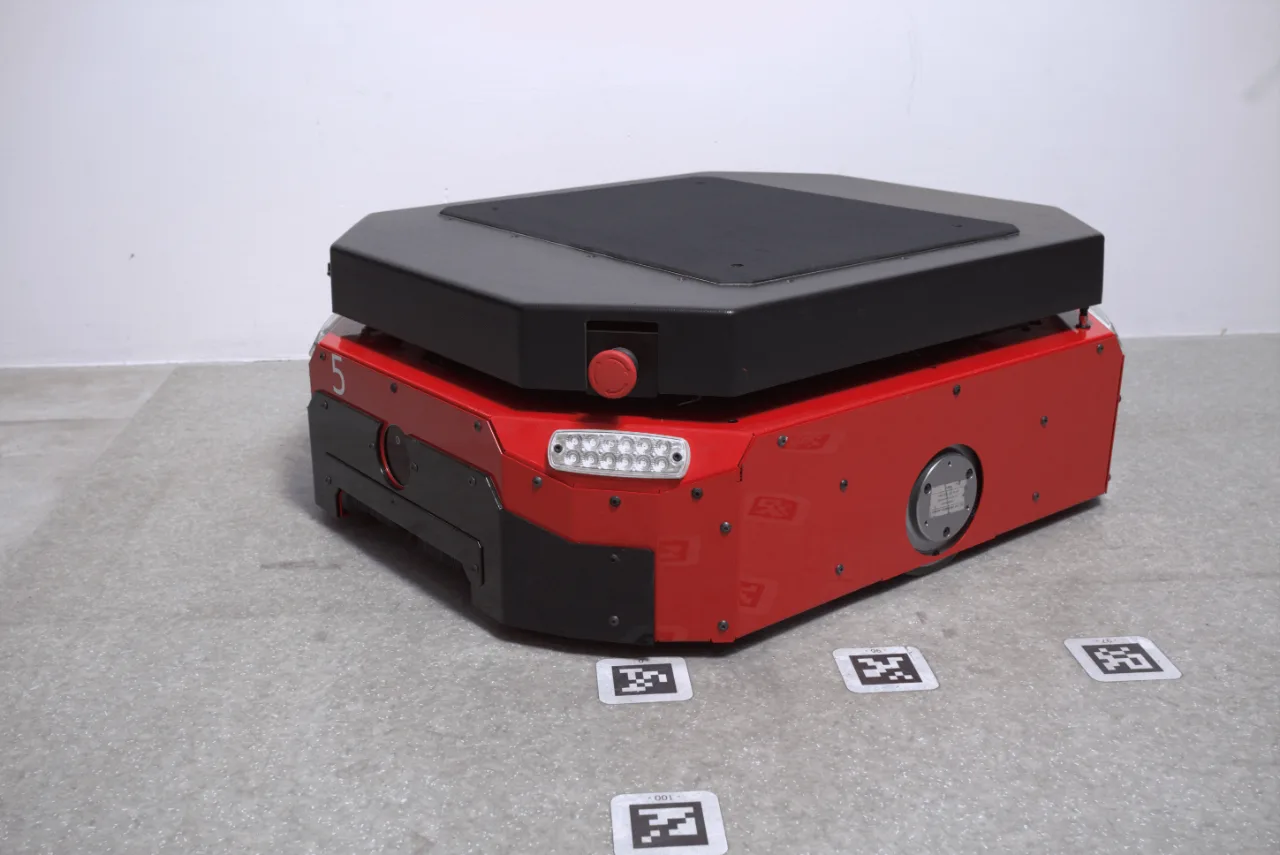
The startup has three robot models:
the smallest – S Bot 10 – used for sorting cargo weighing up to 30 kg;
medium – Rack Robot – for transporting cargo up to 300 kg;
cargo – Heavy Robot – can transport objects weighing up to 1 ton.
All robots work from 8 to 12 hours on a single charge, charging time to 100% is three hours. Pikulin does not disclose the cost of the products, citing commercial secrecy.
How to Enter and Succeed in the US Robotics Market
Before external disruptions, Deus Robotics was in discussions with a dozen companies but publicly disclosed only one client — Nova Post, which remained an active partner. In August 2022, the company began deployment at a logistics terminal, with an order exceeding 40 robots. The founder has not disclosed the contract value or current financial metrics.
By early 2023, potential clients — including retailers, e-commerce companies, and logistics providers — gradually resumed negotiations. At the same time, with a new investor on board, the company is increasingly focused on entering the US market.
“Their expertise suits us: Kosovan knows how to create successful IT companies, Tislenko is knowledgeable about hardware companies,” says Pikulin. Currently, one of the most successful “iron” startups in SMRK’s portfolio is Ajax Systems by Oleksandr Konotopskyi, which opened a factory in Turkey in 2022 and launched sales in the US. Forbes-surveyed investment analysts estimate Ajax’s revenue at $150–200 million.
“With our robots, people work 3-5 times more efficiently than without them,” Pikulin boasts.
The solutions were tailored for sorting parcels in postal operator warehouses and assembling orders for online stores.
Deus Robotics is not a pioneer in its niche. In 2022, the global warehouse robot market was worth $5.7 billion, according to researchers at IMARC Group. Among the most famous players are Amazon Robotics, Chinese Quicktron, which serves AliExpress warehouses, and DHL partner Locus Robotics.
Pikulin identified a competitive advantage during a period of operational disruption and power outages. Deus Robotics engineers upgraded the robots to force them to constantly maintain a charge above 40%. This optimizes the autonomous working time, even when the warehouse loses power.
For the US market, the startup changed its name – until 2022, it was called Deus Robotics. Americans like it more, says Pikulin. Whether the new name will speed up the signing of a contract is unknown. Negotiations with the first American client are ongoing, without going into details, says the founder. Also, in 2023, there are plans to enter Poland and create new models. Will $1.5 million be enough for this? Deus Robotics wants to attract the next round of funding in late summer to early autumn.

