Deus Robotics, a startup developing sorting robots, raised $5 million
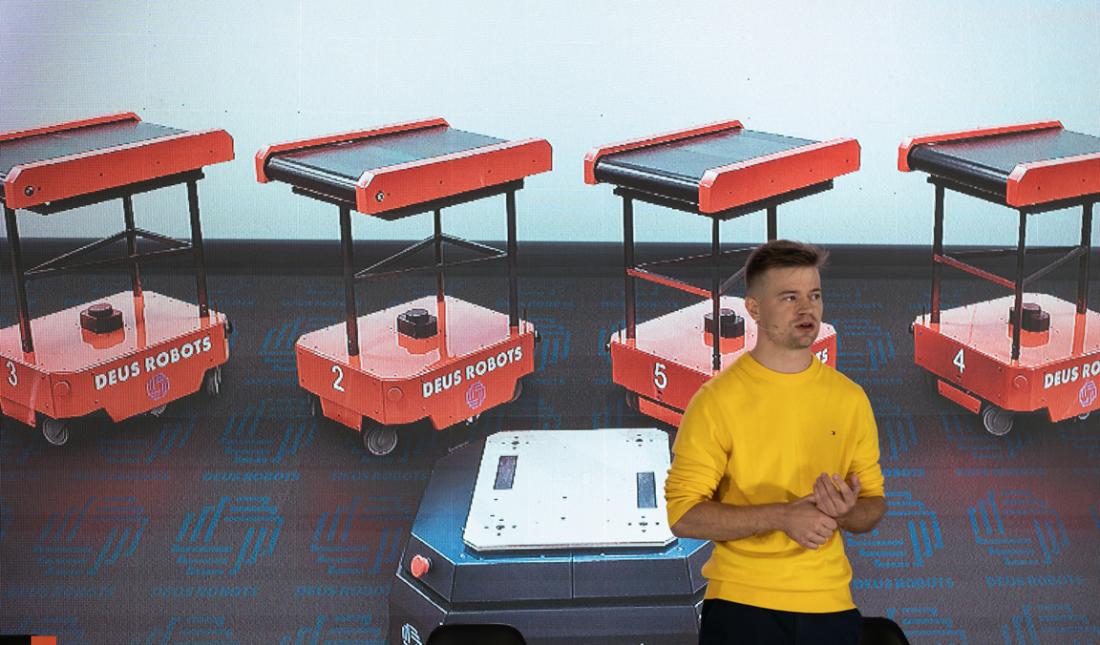
Deus Robotics is developing sorting robots designed for companies with large warehouse operations. The startup has already initiated pilot testing with Nova Post and has raised $5 million in investment from BGV Trident Capital. The company’s story was featured by Forbes.
The startup was founded by programmer Paul Pikulin in 2018, who invested $1 million of his own money and $500,000 in angel investments. At the time, he also worked for the gaming company WhaleApp, which developed mobile games such as Hidden Hotel, Family Zoo, Resort Hotel, and Rise of Heroes.
The startup team is working on three types of robots: one for sorting goods weighing up to 30 kg, one for transporting shelves up to 300 kg, and a cargo robot for transporting pallets. The latter is capable of lifting loads up to 1 ton, making it the most expensive to produce.
Currently, the startup assembles robots in-house while sourcing components from global suppliers, including China, Europe, and the United States. The team does not plan to launch production in China, instead focusing on scaling manufacturing through a dedicated facility alongside its existing R&D center.
In 2021, Deus Robotics assembled 40 robots, and the plan for the next year is to produce 1000 machines and achieve profitability. Deus Robots is already collaborating with Nova Post and is in active discussions with 13 other companies, according to the founder. Abroad, the startup aims to work with businesses that have warehouses (retail, postal operators, pharmaceutical and automotive companies).
The team raised $5 million in investment from BGV Trident Capital, co-founded by Ilya Ponomarev and entrepreneur Hennadiy Butkevych.
What will these investments be used for? Initially, Pikulin considered building a $20 million factory, but now plans to rent a more cost-efficient facility and equip it for production. The plan is to expand the team from 25 to 80 people, enter international markets such as Germany, the Czech Republic, Poland, and the United States, and scale production to 400 robots per month
ain.ua

